Explorations in Audio

Are you ready to Explore?
In 'Explorations in Audio' I aim to share some practical insights on setting up and optimising an affordable HiFi system. Although one would think that, really, all has been said about HiFi, some surprisingly simple questions still remain, e.g.: 'Is digital superior to analogue?' 'Do cables matter?' 'Can digital cables pick up interference?' 'Should speakers be placed on spikes?' 'Has evolution in HiFi made older gear obsolete?' 'Where should I place my sub?' 'Which room correction works best?' - On the other hand: 'Are these really the right questions?' - We shall see.


What's new in eiaudio?
While the entries in this blog are divided into the three distinct categories above, you will find a mixed listing of the most recent postings below. The most recent article is shown first. If this is not your first time visiting, the listing below is a good place to quickly check if anything is new.
Your input is more than welcome, as long as you follow the basic audiophile rule of ‘ear over mind’. This means that you do not comment based on what you think you know, but only on the basis of your own listening experience. Please feel free to suggest gear for testing as well as leave comments on the descriptions provided here.
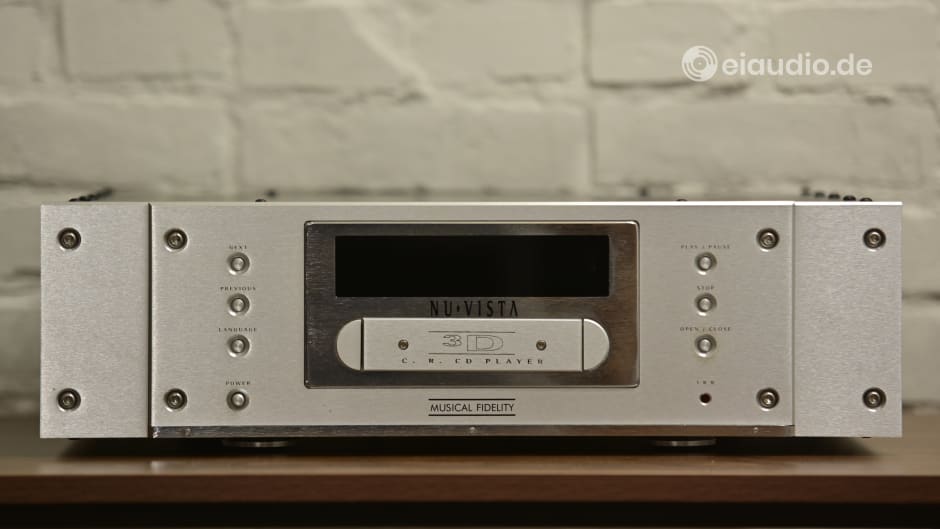
Musical Fidelity Nu Vista 3D
Published: 25/10/2026
Manufacturing date: 2001
Author: Karsten Hein
Category: Gear & Review
Tag(s): CD-Players
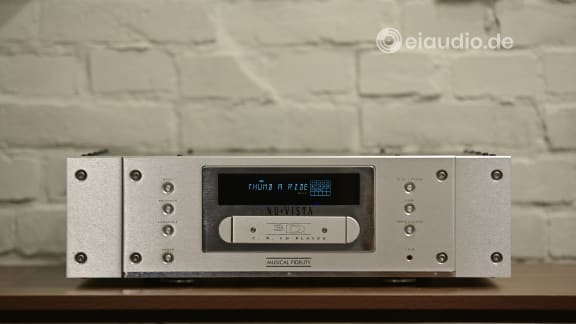
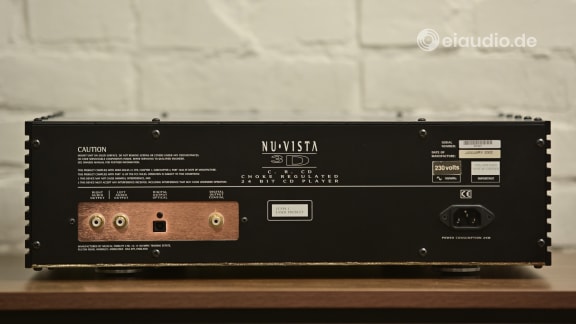
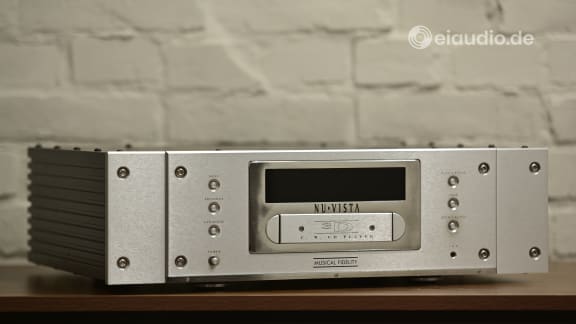
The Nu Vista 3D was conceived at a time when both SACD players and music streaming were the latest trend. And yet Musical Fidelity changed its mind in the last minute and brought out a CD-only player with some true high-end features: a superb power supply, excellent resonance management, 24-bit Delta-Sigma DAC with 8x oversampling and upsampling converter, as well as an impressive output stage featuring Nuvistor vacuum tubes.
(Listening in Progress. Full review coming up.)

Polk Audio RTi A7
Published: 12/10/2026
Manufacturing date: 2008
Author: Karsten Hein
Category: Gear & Review
Tag(s): Loudspeakers
Polk Audio has a long tradition of building affordable loudspeakers for the consumer market. Founded in Baltimore in 1972, the company pledged to build high-quality loudspeakers that would not break the bank. This was mainly due to the dedication of its owners, the three Johns Hopkins University graduates Matthew Polk, Sandy Gross, and George Klopfer, who saw their first commercial success with the “Monitor 7” loudspeakers in 1974. Among the many product lines that followed were some truly innovative designs, such as the “SDA” loudspeaker series of 1984 as well as the “L800” of 2018.
The RTi A7 is my first personal experience with Polk loudspeakers. Although I do remember the brand name from my childhood, the American audio market of the 1980s and 90s was dominated by cheap and thin-sounding Japanese products. Much like today, the focus of mainstream advertising was on products that could be sold at high margins, rather than products that sounded the best. And this is how it happened that the brand names we saw in the households of our family and friends were those of Sony, Technics, or Pioneer, JVC, Aiwa, or Kenwood, Yamaha or perhaps Denon. — Onkyo, Sansui, and Nakamichi were also present, but they were a little more exotic in the affordable price range.
While all of these Japanese brands also produced a selection of very capable high-end products, their speakers were tuned to the Japanese ear, which could make them sound oddly misplaced in American and European homes. Widely popular at the lower end of the market, the early Japanese transistor amplifiers could sound metallic and cold, and Japanese loudspeakers often sounded artificial and flat with a leaning towards brightness. Consumers in this time simply acknowledged that music sounded less engaging and satisfying from recordings than it did in real life, much like the owners of soundbars and bluetooth devices experience in our time. — Although the brands and technology are quite different today, the sound quality has not much improved for the average consumer.
And yet, American brands did exist in those days and provided a more suitable tonal balance to American homes and tastes: McIntosh Laboratory, the Audio Research Corporation, Phase Linear, and Conrad-Johnson—they all produced exceptional audio gear at the higher end of the market, while David Hafler (formerly Dynaco) and Adcom shook up the affordable segment. Such frontend electronics would have been the natural playing partners for Polk loudspeakers — among the likes of Thiel Audio, Boston Acoustics, the Infinity Corporation, JBL, and Klipsch. A direct competitor to Polk would have been the Advent Corporation, which—similar to Polk—focused on budget-friendly designs.
Many of these American products of the 1980s and 1990s had one common advantage over their Japanese import cousins in that they got the tonal balance right. Their owners could turn up the music at high volume without having to fear that their equipment sounded squeaky. There was a satisfying fullness to American audio that supported familiar aspects of natural instruments and performances. And—zooming forward some 40 years—I am pleased to report that this basic quality has carried over to the RTi A7 loudspeakers. Their tonal balance is where it should be, which is the basic requirement for any loudspeaker that is worth discussing. Correct tonal balance means that we can discuss the music as a whole, instead of having to focus on clumsy individual characteristics, such as bass, midrange, or treble performance.
The RTi A7 specimens that are the subject of this review were lent to me for testing by my Canadian friend Kristian who is a local ship pilot and initially put together his Hi-Fi system to enjoy his favorite music and movies alike. In his original setup, he used the RTi A7 as his main stereo loudspeakers, which he connected to an Onkyo multichannel receiver that also drove his Polk surround and centre speakers. As most people do, Kristian placed his speakers to the left and right of his television in a way that they did not hinder walking in the room. His living room served many purposes and was not particularly treated for sound. The Onkyo receiver allowed for some basic room correction and calibration to set up the 5.1 system, and Kristian was happy with the resulting sound.
In fact, it wasn’t until he listened to some of my studio setups (Martin Logan SL3 and Epicure EPI 500) that he was perplexed by the realism in tonality and soundstage of such a system, and he started to wonder how far his RTi A7 would go, if they were properly set up in a treated room. And, to be honest, I was wondering the same. On the one hand, I have always had a knack for American loudspeakers and had heard good things about Polk Audio. On the other hand, I was impressed with the RTi A7’s sheer size. At 45 cm depth, they do have sufficient volume for attack and look like capable loudspeakers. We agreed to give them a try in my studio if the opportunity presented itself. A few months later, I learned that Kristian was moving house and that he was looking for a place to store his system for a while. — This was the opportunity we had been waiting for, and I was more than happy to oblige.
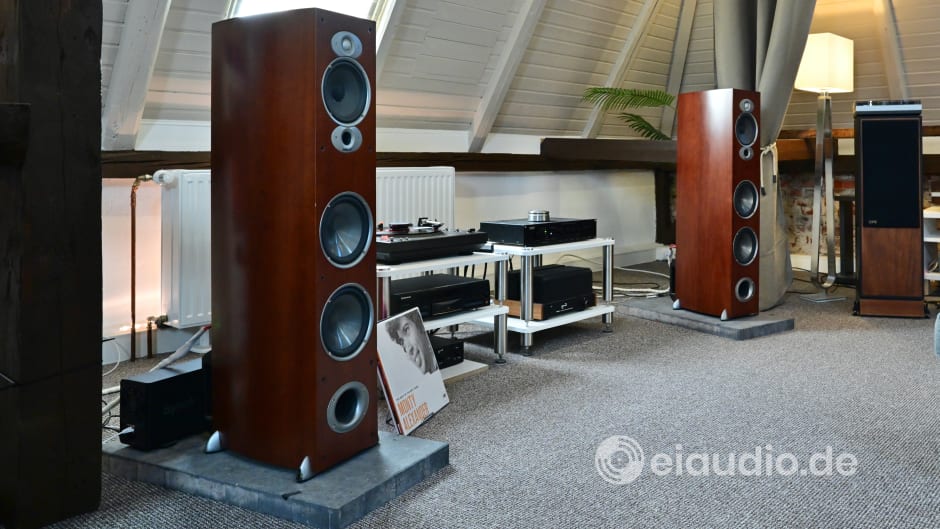
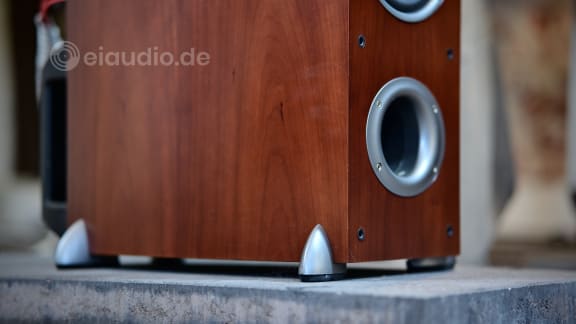
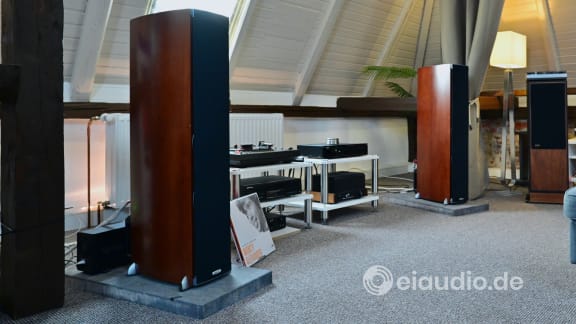
Back in my studio, I placed the RTi A7 in the exact position of my Epicure EPOI 500 loudspeakers with the acoustic centre of each driver approximately 140 cm from the room’s front wall (i.e. the wall behind the speakers). As usual, there was a 100 x 50 cm concrete slab underneath each loudspeaker to reduce floor resonance. The RTi A7 come with convenient risers that are mounted on the sides of the cabinets to give them a wider and more stable stand. At twenty-five kilograms each, with the generous spacing of the risers and the real-wood cherry veneer the speakers convey a solid feel. And yet, the overall visual design is as compelling as it is unorthodox and already provides some clues as to the RTi A7’s promises and potential risks.
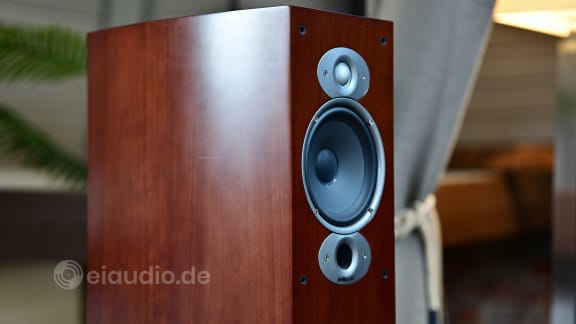
On the positive side, the treble and midrange drivers are positioned closely together to resemble a point source. The tweeter diaphragm is made of a silk-polymer which reduces the probability of these drivers sounding harsh. In addition, the treble-midrange section is internally separated from the bass section and utilizes its own front-firing air vent. Polk calls this feature ARC, short for Acoustic Resonance Control. Two long-throw woofers, each 18 cm (7 inches) in diameter, are housed in the acoustically separated chamber underneath. These woofers share one front and one rear-firing bass-reflex port. The rear port uses a conical diffuser to prevent the airflow from pointing straight at the wall behind. This feature allows the speakers to be placed closer to the front wall and might also serve to reduce chuffing noises from the port.
The loudspeaker cabinet uses Polk’s curved, laminated construction, a distinctive cabinet design that the company calls: DAHLI, short for Damped Asymmetric Hex Laminate Isolation. The RTi series documentation describes a six-layer laminate incorporating five viscous damping layers, and its curved, asymmetric cabinet walls are intended to increase rigidity, damp panel resonances, and reduce audible cabinet coloration. However, in the end, it is not the cabinet material but the narrow width combined with the multiple ports that can make the design more difficult to handle in terms of bass accuracy. Being just 22.5 cm in width, the RTi A7 employ two 7-inch long-throw woofers to generate bass dynamics. This means there are two drivers with long diaphragm excursion working in a single multi-ported cabinet. The 6.5-inch midrange driver located above them is only marginally smaller in diameter than the two woofers and also resides inside a ported cabinet.
In other words, there are many similar drivers and many ports present. The overall challenge is to keep all drivers and ports aligned from a phase and timing perspective while at the same time separating their duties on the frequency spectrum, in order not to overlap and be in competition with each other. As long as the speakers play in a multi-channel setup paired with a subwoofer, a little bass inaccuracy is going to be of lesser concern. In such a setup, so many drivers are simultaneously competing for attention from all directions that the wow-effect feels more perplexing in all its technical dimensions than it is musical. However, in the perfectly arranged 2-channel setup of an acoustically treated room, bass inaccuracies will serve to direct the attention to the loudspeakers themselves rather than the music.
I listened to music from two sources: a Technics SL-1310 direct-drive turntable of 1975 with AT-VM540 ML cartridge and a Pioneer PD-S604 platter-drive CD-Player of 1995. Both sources are audiophile legends, famous for sound integrity, despite being quite affordable. I tested two preamplifiers with the Polk: an RGR “Model 4” transistor with discrete layout (rather than chips) of 1980, which is my usual front-end in this position, and a Symphonic Line “Die Erleuchtung” all-tube preamplifier of 2006 that was lent to me by my audiophile companion Henrik. The RGR was the hidden champion of its time. It was an affordable PA-style amplifier that punched well above its weight, due to its discrete circuit design, low noise, and enhanced connectivity. “Die Erleuchtung” is a completely different beast. It is a truly audiophile high-end gem that shows what is possible in audio design if money is no object.
Although I enjoy the sound of the RGR, it was no match for the Symphonic Line in an A/B comparison. The tube pre-amplifier sounded larger, fuller, and more musical in all dimensions. The power amplifier was a Dynavox VR-70E-II EL34 all-tube unit of 2013. Like the RGR, the VR-70E is known as a hidden champion that just needs a little extra technical know-how to sound great. While it may seem like a contradiction, the EL34-tube amplifier is an excellent companion and reminiscent of the Dynaco ST-70, to which both the amplifier and the company owe its name. Few people appreciate that many of the legendary Dynaco patents were sold to Chinese investors in the 1980s, after David Hafler had left the company. I would think this was mostly due to a lack of appreciation of Dynaco’s superb technology both in the USA or Europe. The Chinese, on the other hand, were only beginning to discover high-end listening pleasures and were hungry for pure designs. (Also see my review of the Dynaco PAS-4 preamplifier)
In terms of interconnects, I mostly use braided or shielded solid-core silver cables with a mass-balanced signal return path. In these interconnects, I find the best combination of coherence, dynamics, and natural transients. If you know how to set up systems, silver cables will not sound harsh or shrill, but they are unforgiving of any flaws in your setup. (If you are the type of person who is given to yelling out “voodoo” in self-protection rather than finding out the reasons for audible differences, then silver cables are not for you.) To connect the speakers, I use special types of multi-stranded and hand-braided cables that are custom-made for me by Matthias (full review coming up shortly).
I am fortunate enough that Matthias has been using me as a testing lab for his new cable designs, which means that I have had the pleasure of auditioning many of his new designs before anyone else. It has been quite a journey, and we are now at that stage where I never want to do without his cables again and am running them on all systems to my greatest satisfaction. The tonal balance, speed, agility, and overall musicality are such that the cables themselves become invisible to the ear, as long as they are matched well. Due to differences in capacitance and layout, not every cable is the optimal choice in every situation. The Dynavox VR-70E-II tube amplifier has binding posts for 8 Ohm and 4 Ohm loads and benefits from low capacitance cables, whereas beefy transistor amplifiers often benefit from high capacitance designs for improved tonality and less ringing. These are only tendencies, of course, as it is also true that not all beefy amplifiers are able to handle high capacitance cables.
“Die Erleuchtung” automatically adjusts its line inputs to the capacitance of the source, which is a real benefit to get the tonality right. In combination with Matthias’ cables, the Polk RTi A7 had some genuine high-end playing partners. The other components were at least good enough not to be the acoustic bottleneck of this setup. When positioned according to the acoustic profile of the listening room, the Polk speakers produce natural vocals and timbre. The speakers’ narrow fronts, however, make the room’s front wall a major factor in the listening experience. The time difference of the second reflection (rear wall = 1st reflection - front wall = 2nd reflection) is too small to be held acoustically separate from the source signal. If the speakers are placed in front of a glass or concrete wall, this will blur the stereo image and make even their silk-composite domes sound harsh. I have found that the RTi A7 greatly benefit from acoustic absorbers behind them. Drapes, shawls, shelves, anything that absorbs the second-order reflection will help.
In doing so, the sound stage becomes less cluttered and deeper. The phantom centre becomes sharper and more palpable. Placing felt pads underneath the risers will further contribute to a more organic and natural sound. The bass performance strongly depends on the music material. Generally speaking, there is bass in abundance. However, it is not necessarily clean and nuanced, which becomes apparent when the music gets faster. A drum set is not as recognizable in its transients, attack, and decay as it is on my Martin Logan SL3 and Epicure EPI 500. I am not particularly focused on bass performance myself and only start to care when it takes away from the tonal balance or realism of the event. Since, in my setup, the tonal balance stayed intact, I would be willing to accept a bit of bass blur and puff for the sake of scoring higher on the wife-acceptance factor, which is the foreseeable result of having a slim and unobtrusive front.
And this really is the story of modern HiFi: It mostly needs to take place in the shared living spaces of the family and cannot be designed based on its acoustic merits alone. Women tend to have the last word about what goes into the household and what needs to stay in the garage or basement. When I offer to give HiFi advice to someone, I often see men cringe at the thought of having to discuss this with their wives. Real-world speakers need to sell to real-world households. And under these less than acoustically ideal conditions, the Polk RTi A7 are solid performers with an unobtrusive and elegant look.
Note on room reflections:
Let's say your listening room is five meters in depth, and your tweeter is positioned at one meter’s distance from the room's front wall. This would mean that the sound coming from the tweeter is reflected from the room's back wall after 11.7 milliseconds or 0.012 seconds (if there is a bare wall behind you). The same sound hits the front wall after another 15.58 milliseconds (second-order reflection). Your head would probably be 63 centimeters away from the back wall for a balanced sound, thus shortening the distance to 4.36 meters and adding another 13 milliseconds or 0.013 seconds of sound delay.
This means the second order reflection reaches you after 40.24 milliseconds or 0.040 seconds. The problem is that such an overlapping sound delay sits right on the edge of how human hearing processes echo and timing. Instead of hearing two distinct, separate sounds, listener's experience this delay as a heavy, unnatural thickening of the sound, a distinct "fluttering" texture, or a hollow, spacious effect.
Specifications
- Type: 3-way floor-standing loudspeaker
- Design: 2x front-ventilated/ported, 1x rear-ported
- Features: Polk resonance control (ARC)
- Nominal impedance: 8 Ohms
- Power sensitivity: 89 dB (1 Watts / 1 meter)
- Tweeter: 1” (25.4 mm) silk-polymer dome
- Midrange: 6.5” (165 mm) polymer-composite cone
- Bass: 2x 7” (178 mm) long-throw polymer-composite cone
- Driver principle: dynamically balanced
- Frequency response (-3 dB): 35 Hz - 26,000 Hz
- Crossover frequencies: 125 Hz, 2,700 Hz
- Input terminals: Bi-wiring, gold-plated
- Dimensions: (H) 107 cm, (W) 22.5 cm, (D) 45.4 cm
- Finishes (real wood veneer): Black oak, cherry
- Weight (per speaker): 24.95 kg
- Cabinet warranty: 5 years
- Country of manufacture: China
- Year(s): 2008 - 2019, approx.
Bidjan Tschaitschian, The FIR-BoxX Project
Published: 19/07/2026
Author: Karsten Hein
Category: Explorations
Tag(s): Active HiFi Systems
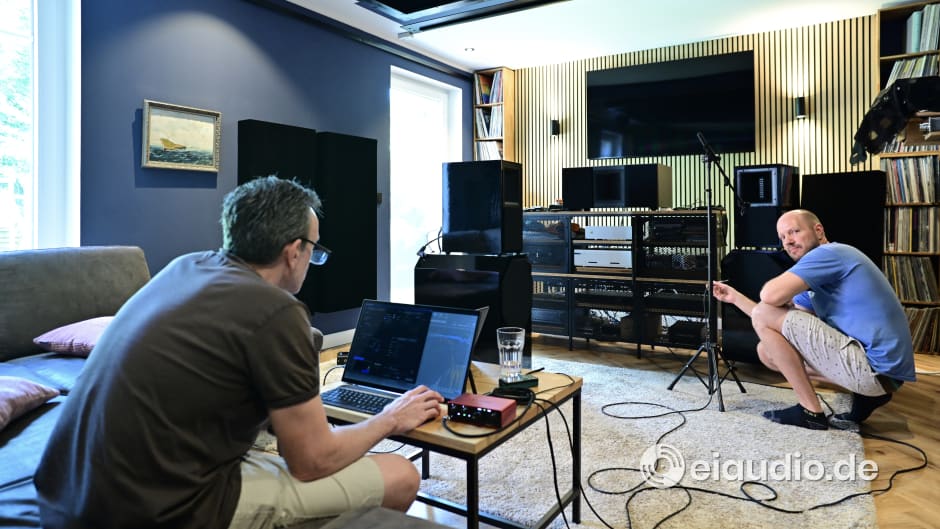
The Hamburg-based IT expert Bidjan Tschaitschian uses digital Finite Impulse Response (FIR) technology, based on the “FIR-BoxX” multi-channel amplifier developed by Andreas Heggendorn in Switzerland, to ensure ultra-linear and phase-correct performance from each loudspeaker driver and improve crossover management. The eight-channel FIR-BoxX facilitates phase-, time- and amplitude correction, as well as room adaptation, and has the potential to bring personalised, high-end listening experiences into ordinary homes. — Does that sound complex?
From Vibration to Sound
Let's start from the beginning. Sound waves originate from physical vibrations that set the surrounding air in motion. Such vibrations are produced by our vocal cords when we speak, sing, or shout. In this process, air is pressed through them from our lungs, travels upwards through the vocal apparatus in the throat and out of the mouth into the open space. The resulting sound is influenced by each body’s unique physique. Some people sound loud, coarse, or boisterous, while others sound soft, quiet, unenergetic, or timid.
Similarly, musical instruments produce sound waves originating from vibrating reeds, strings and drum skins, or from the metal of triangles or gongs. Much like human vocals, these vibrations are shaped and amplified by the unique form, resonating chamber, and size of each instrument. The materials used also play a role, as they contribute their own resonance frequencies to the resulting sound. This is why each instrument has its own distinctive character and is valued more or less highly by the musician playing it.
Sound waves leave each resonating body in a specific pattern, providing the listener with clues about the type of instrument or person, about their playing or speaking style, and their distance and location in relation to the listener. If there is more than one active instrument or person present, our ears try to determine the distances between them and create a mental map of the scene or stage. Phase and time coherence are especially important in this context, as they enable us to estimate location. Higher frequencies are more revealing and easier to trace than bass frequencies.
Every vibration has a defined beginning, duration, and end. When time is factored in, a specific vibration creates a four-dimensional energy event traveling through space. Instrument builders look for pleasant harmonics and try to eliminate undesirable resonances from the instrument's output. Human beings also place an emphasis on sounding pleasant for the sake of social acceptance. Consequently, we all grow up in a world in which each utterance has purpose and design, and each sound has coherence. Any deviation from this is intentional and carries meaning. For example: Dissonance often signals distress. And a sudden compression of frequencies indicates that an object is moving towards us at high speed.
Recording: From Large to Small
Although instruments can range in size from tiny and compact to large and bulky, it has been found that faithful recordings of their acoustic output can be made using a single microphone diaphragm. In such a setup, the diaphragm is much smaller than the instrument and made from materials that mostly remain neutral across the musical spectrum in terms of their own resonance. The microphone's role is to capture the acoustic event without introducing too many of its own characteristics. While such microphones can be expensive, high-quality recordings are possible across a wide frequency spectrum once a good mic has been found. At this stage, the original phase-time relations are captured by a single diaphragm and remain intact, much as they do when frequencies hit the human ear.
While a small microphone diaphragm is sufficient to capture the vibrations of large instruments and life-size vocalists, playback tools in the studio or our living room need to again be large and life-like to recreate an authentic impression of the event. The air needs to vibrate in the same way as it did on the day of the recording, even though the original instruments and vocalists are no longer around. In other words, there are no metals, woods, strings or drums present. And it is this large amount of air movement that leads to most of the challenges of loudspeaker building.
Playback: From Small to Large
High-frequencies require a rigid but ultra-light diaphragm to facilitate nimble acceleration. Midrange frequencies need to be especially true to tone, because humans are ultra-sensitive to tonal shifts in the frequency spectrum of the human voice; and bass frequencies need to be powerful and at the same time layered and nuanced. While the transducers should do all this, they must not add any resonance frequencies of their own. The traditional approach has therefore been to work with two or three dedicated drivers, with each one perfectly designed to do its job within a narrow frequency range.
Recreating the original sound via separate drivers poses some challenges, of course. Because the materials, diaphragm masses, and projection planes are not the same between them. Each driver has its own characteristics in terms of acceleration and lag, material resonances, electrical and physical resistance, power sensitivity, diaphragm travel, etc. No matter how well the characteristics are adjusted and matched via custom-built crossovers, the resulting sonic image is never fully intact. While phase and time shifts also occur in natural instruments and in the recording room, the inaccuracies produced during playback contain no useful information, are never desirable, and always take away from the integrity of the overall experience.
Single vs. Multiple Drivers
Manufacturers have dealt with this issue in different ways: Saul Marantz’s Dahlquist DQ10 loudspeakers, for example, are meticulously matched 5-way speaker phase-arrays. In his design, Marantz brought all five drivers onto a plane so that time-smear between them would be reduced to a minimum. This design worked so well that the DQ10 are considered exceptionally musical performers to this day. Marantz’s idea stemmed from an earlier design by the Quad company from England, who had designed a loudspeaker of similar dimensions to the Dahlquist that was based on a single diaphragm. The Quad ESL 57 is famous for producing phase-correct music that surpassed most of the loudspeakers of its time. Saul Marantz wanted to marry the bass performance of an electrostatic speaker with the output volume of a dynamic system.
My Martin Logan SL-3 loudspeakers aim for a similar result by using an electrostatic ‘Mylar’ diaphragm for the treble and midrange and pairing this with a dynamic bass driver for more natural bass weight and dynamics. For electrostatic speakers to cover the full frequency spectrum, however, they would need to be very large. The SL-3’s dynamic woofer only comes in at frequencies where the human ear is no longer as sensitive, which makes the dual driver setup more agreeable. However, electrostatic speakers are bi-polar by nature and require careful placement, lots of space behind them, and plenty of experience in setting up systems to sound at their best. Magneto-static speakers, from Magnepan and others, offer similar benefits and are easier to set up. They are also better suited for smaller rooms. All of the mentioned designs are unique approaches to solving the single driver issue. However, the most successful applications have remained small in number, because they require an excellent music source, thoughtful cabling, a powerful amplifier, and a treated room.
In my experience, far fewer people are willing to invest the money, time, and energy to learn about properly setting up a High End system (along with a properly treated room) than are interested in the experience of listening to and owning one. In fact, so much can go wrong in the setting up of a HiFi-system that I devoted some 30 chapters to this subject, all featured in the “High Fidelity” section of this blog. While it cannot hurt to have in depth knowledge and to lay down the basics for your HiFi or High End system, FIR technology now offers all-new possibilities that provide a similar effect at lower cost and with much less fuss to those who only want to enjoy the pleasure with less of the pain.
Maximising Driver Control
When setting out on your FIR adventure, it is important to understand that each of the amplifiers inside the FIR BoxX needs to be directly connected to one of the drivers in the loudspeaker. Usually, this means that the existing loudspeaker crossover is removed or bypassed and a new multi-channel terminal is installed at the back of the loudspeaker. Speakon connectors—originally developed by Neutrik for professional audio applications—are useful in this context, as their 8-pole version is able to run four amplifier channels through a single plug.
The eight amplifiers inside the FIR BoxX mean that one such unit is able to power one pair of 4-way speakers. The Dahlquist DQ10’s unusual 5-way design would mean that two FIR BoxX amplifiers are necessary (perhaps not yet feasible in clock-perfect fashion at this time), whereas a 3-way speaker would have two channels free for the addition of subwoofers, if these are desired. Each FIR BoxX amplifier produces up to 30 watts RMS of Class-D amplification, and—while this may not sound like lots of power—the effective output cannot be compared to that of a classic amplifier from looking at this number alone. Here is why:
The classic amplifier sends all frequencies to the loudspeaker where passive crossover components divide the signal using capacitors, coils, and resistors. This means, the amplifier sees a relatively complex load, and the passive components take away from its power output. In the FIR BoxX, on the other hand, the signal is treated, before it reaches the amplifier, so that each amplifier only needs to process the signals intended for the one driver it is directly connected to. Of course, in the case of my 2-way Martin Logan speakers, considering the complex load of an electrostatic panel, 30 watts might still be insufficient, but then electrostatic speakers already operate in a phase-coherent fashion and are not the primary focus of FIR technology.
The FIR benefit is much greater for loudspeakers with multiple dynamic drivers. During the setup (that currently still needs to be performed by someone with experience in this field, such as the Hamburg based FIR-developer Bidjan Tschaitschian) the output of each loudspeaker driver is measured, linearised on its own and then harmonised with the others. The prompts might be: “Send frequencies above 800 Hertz to the midrange.” “Reduce a particular resonance by 4 dB.” “Delay the tweeter by 0.17 ms.” “Change the phase relationship between the drivers.” “Compensate for the specific driver enclosure.” Or: “Apply a specific equalisation curve.” — In doing so, the FIR BoxX is able to align the acoustic centres of the drivers and to compensate for electrical and mechanical inaccuracies in the original driver and loudspeaker design.
As I learnt, there are often surprises during these early measurements. It is not rare, for instance, for one of the driver’s polarity to have been inverted during the original loudspeaker assembly. Once all drivers have been measured and set individually and as an ensemble, a final measurement is conducted of the complete stereo setup, in which the loudspeaker response is once again calibrated to suit the specific characteristics of the listening room when heard from the position of the listener. I was a witness to this type of setup in my audiophile companion Henrik’s listening room. His room had already been acoustically treated, we had set up the speakers according to the room’s specific resonance profile, and we had previously optimised the coupling of his speakers towards the floor. Given these preparations, Henrik’s passive setup already sounded great.
Henrik’s Dieter Achenbach Trinity speakers have power-sensitive chassis of high quality, and the original crossover was well-conceived using high-quality components. Looking over Bidjan Tschaitschian’s shoulder during the setup, I could see the driver resonances and the peaks and their output curves sloping. Bidjan carefully adjusted the amplifier’s output to flatten the curve, a process he diligently performed for each driver and then for the drivers in combination. I took some photos of the process and had to leave before the setup was completed and only came back for listening some days later when everything had already been put in place.
The FIR BoxX can handle audio signals from both analogue and digital sources, but it does not offer RIAA correction for phono applications. There is a total of four audio inputs available: 2x line stereo and 2x optical. (True for the tested FIR BoxX DIY. Some older versions have only one of each.) Henrik’s analogue frontend consisted of a massive Transrotor Zet3 turntable that was connected to a Phasemation t550 step-up transformer. RIAA correction was via a Symphonic Line “Die Erleuchtung” preamplifier. From there the signal could be routed either to the FIR-BoxX for digital processing or take the classic analogue route to a Musical Fidelity M6 PRX power amplifier. Henrik had left the Achenbach’s original crossovers intact and only bypassed them for FIR activation. This way, A/B comparisons between both technologies were still possible.
Henrik’s digital frontend consisted of an affordable FIIO SR11 digital transport that fed its data directly into the FIR-BoxX using the optical input. At the time, Henrik did not have a digital frontend for the analogue amplifier. Therefore, the only immediate comparison we could make was of the turntable signal routed to the analogue Musical Fidelity M6 PRX power amplifier and, alternatively, to the internal DAC of the FIR-BoxX using the analogue input. The next step will be to upgrade the digital frontend to include a CD-player, a streamer, and a DAC, which will make digital comparisons from multiple sources possible. However, this will have to wait for the next article.
From our time spent listening to the FIR-BoxX playing music from both analogue and digital sources, I can say that it does not draw much attention to itself as an electronic device and instead sets the stage for the music to unfold. This is what all great high-end systems should do, but the FIR-Box has the additional advantage that it is not so much dependent on perfect speakers and surroundings. It can compensate for imperfections where necessary. Henrik’s Achenbach loudspeakers are highly responsive but do require some control from the amplifier due to their large woofers. The FIR-BoxX rose to the challenge and did not show any audible weakness in terms of bass performance. In fact, it so much maintained the musical integrity of each recording that discussions of individual aspects seem a bit misplaced.
The music output is comparable to my electrostatic speakers and does sound somehow more solid and PA-like on the Achenbach due to their directional nature. Where the Martin Logan electrostats create an intimate small club event, in which even the tiniest of sounds are give some attention, the Achenbach Trinity tell the story of a large stage event with more drive and ferocity. Both playing styles have their charm. If you have read my reports on the inflationary use of DSPs at trade fairs and the degrading effects this has on music, I can assure you that the FIR-Box is a completely different beast. Nothing about its rendering of music seems dead, stale, or contrived. It can very well keep up with other High-End setups in terms of agility, tonality, and soundstage. Each sound has its space and dimension, bass sounds as natural as it should.
If I had to define a bottle neck, it would be the FIR-BoxX’s internal analogue to digital converter, simply because switching from the Transrotor to the FIIO SR11 digital transport brought about a clear improvement in terms of performance. Everything sounded bigger and also more convincing. From the analogue source the FIR-BoxX could sound a little thinner and more restrained than going through the Musical Fidelity M6 PRX power amplifier. This may have had to do with the FIR-BoxX compensating massive room modes at at 25 Hz and 50-60Hz, which the Musical Fidelity amplifier simply ignored, but then the same correction was in place when the music was streamed via the FIIO SR11, so the correction was surely not the sole reason. More tests are needed to determine if this effect had more to do with the setup or with the FIR BoxX itself.
Much to our surprise, the FIR-BoxX managed to maintain its perfect command of the speakers up to very high volumes. Each amplifier maintained perfect control of the driver and both timing and detail were very impressive. The sound is highly immersive, and although the sweet spot is similar to the passive, analogue system, walking through the room reveals a more even and tonally balanced impression. This makes listening more enjoyable for sharing a music event with friends and family.
Andreas Heggendorn and Bidjan Tschaitschian are currently working on the automation of the set-up procedure to make the technology more readily accessible to households. The one obstacle that remains is the need for the loudspeaker’s original crossover to be bypassed. (At least this is true for any conventional loudspeaker that is to be FIR-activated, see below.) On the other hand, the FIR-BoxX’s ability to mitigate all kinds of flaws in drivers, speaker cabinets, and listening rooms, makes its application highly attractive. Hobbyist loudspeaker builders, owners of older and lesser loudspeakers, HiFi enthusiasts with less than ideal listening spaces, all of them will benefit from the FIR-BoxX’s existence.
I look forward to hearing more of it.
Note: At the time of writing this, there is an ongoing FIR-ready loudspeaker development project by Daniel Gattig of Lautsprechershop. And Markus Grelka of Rose Handwerk already offers FIR-ready loudspeakers for the larger (100 WPC) MUSICWONDER ONE.
Specifications
- Device name: FIR-BoxX (D.I.Y.)
- Design: Digital pre- and power amp with DAC
- Special features: FIR correction and signal-to-DAC-amp-direct
- Consumption (max.): Approx. 500 mA / 24V
- Consumption (standby): Approx. 15 mA @ 20 V
- Output power (4 ohms): Approx. 8 × 35 Watts (gen2)
- Output power (8 ohms): Approx. 8 × 30 Watts (gen2)
- Power amplifier gain: >25 dB
- Analog inputs (cinch/RCA): 2x line-level stereo, (2 V RMS, -60 dB to 12 dB)
- Digital inputs (cinch/RCA): 2x 16–24-bit, 44.1–192 kHz,
- Digital inputs (optical/SPDIF): 2x 16–24-bit, 44.1–96 kHz
- Minimum speaker impedance: 4 ohms
- Protection features: short circuit, DC current, overheating
- Network connection: LAN/Ethernet 1 Gbit RJ45
- USB developer port: USB 2.0 High-Speed, USB hub: 2× USB Host Type A (external)
- 1× USB Host Type C (internal), 1× USB sound card (internal)
- Chassis dimensions: (W)340 x (H)90 x (D)243 mm
- Weight (FIR-BoxX): Approx. 3.6 kg
- Country of Manufacture: Germany
- Year(s): 2024 (2025, DIY) -
< Martin Logan SL3 | Symphonic Line "Die Erleuchtung" >

Braun L810
Published: 21/06/2026
Manufacturing date: 1970
Author: Karsten Hein
Category: Gear & Review
Tag(s): Loudspeakers
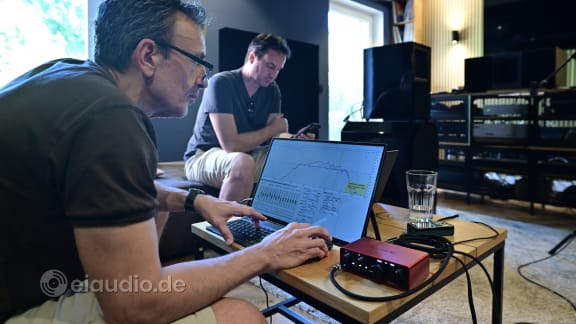
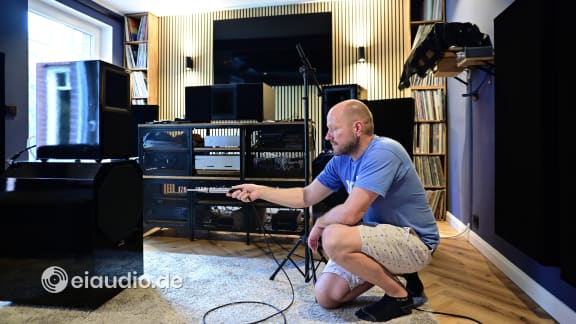
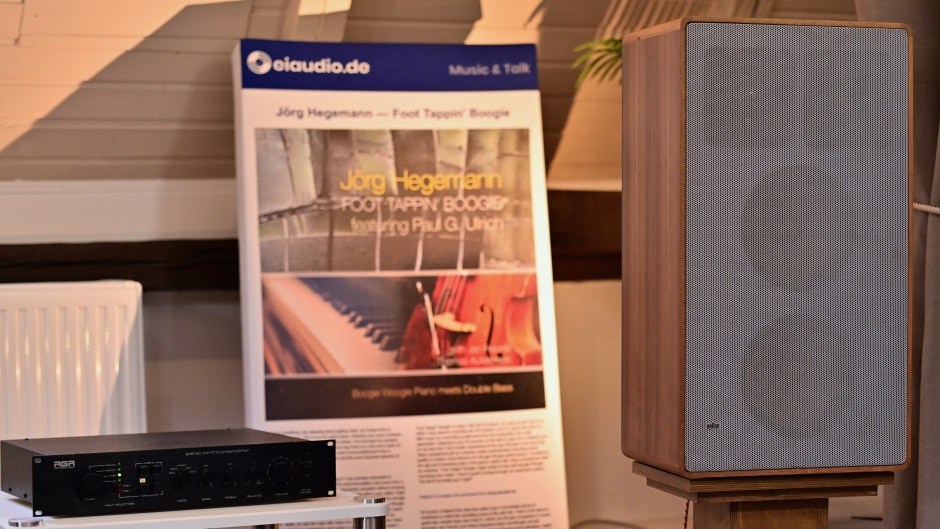
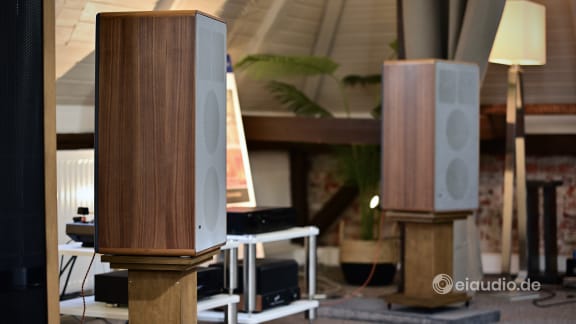
Loud, bold, and heavy is how I would describe my first impression of the Braun L810 full-size loudspeakers. Manufactured by Braun in Frankfurt, Germany during the post-war economic boom, nothing about the L810 is straightforward. If you thought they would simply be a larger version of the L480-I, as I did, you’re in for a surprise.
Ever since my recent re-discovery of the L480-I for use as studio monitors, I have developed a soft spot for classic Braun speakers. In recent years, the faithful rendering of tonality has become my yardstick for assessing loudspeakers. Rather than rating treble and bass individually, I am far more interested in whether the overall performance has the mere properties of a technical sound system or rather captures the character and feel of a musical performance.
Many loudspeakers manage to render individual aspects, such as bass punch and contour, transparent vocals, and crisp treble, but when it comes to tonal character, timing, or the size and position of instruments, they fail to capture the essence of the original performance. I was very much surprised by the L480-I musicality, but as they were so limited in terms of size and listening distance, I could not help but wonder how their larger siblings would perform in comparison.
Braun's range of 1970s speakers started with the small L410 and culminated in the L810 and L810-I, the company's flagship models. To find out how far Braun, under the guidance of Dieter Rams (see below), had taken their Bauhaus-inspired reduced-form, rounded-edge design, the L810 seemed an obvious choice. While I was still contemplating whether to opt for the smaller L710 or go with the L810, a perfectly maintained pair of L810 came up for sale near us. This circumstance aided me in my decision, of course, as did the fact that my audiophile friend Luigi wrote to inform me about the offer shortly after. Our shared interest in loudspeakers means that we can share, trade or swap.
Although my initial contact with the seller sounded promising, and the Brauns were immediately reserved for me, our correspondence was interrupted several times, ultimately postponing the pickup by close to three weeks. It turned out that the L810s were part of the estate of a Hamburg doctor, who had also been their first owner and bought them in the early 1970s. Except for two small scratches on the back of one of the speakers, the L810s looked as if they had only just left the Braun factory in Frankfurt.
They still had their original 0.75 mm² cables with DIN plugs, which meant I could not test them with the tube amp I had brought along. I decided to take the plunge and purchase them without testing them first. Based on their immaculate appearance alone, it seemed a risk worth taking. My mother had accompanied me to the pickup in Hamburg, and on the drive back to Marne, we marvelled at the inconspicuous Braun design and the speakers' timeless engineering.
I don’t know about you, but every time I bring vintage speakers back to life, I am completely overwhelmed by the fact that they can still play music. This initial euphoria is also based on my eager attempt to comprehend their sound character. The question that keeps me busy and excited is: “How much of what I am hearing is a deliberate design choice, and how much is based on decay or my present lack of understanding?” Listeners of another era may have had different room furnishings and enjoyed different music. They may also have had different yardsticks for defining sound preferences.
On the other hand, materials do age over time. Crossover parts may have changed their resistance or capacitance, drivers may have become clogged with ferrofluid or have sagged over time. Materials may have become soft, hard, or brittle. Finally, I may not yet properly understand how these speakers should be set up, what kind of equipment and positioning they require. Therefore, any preliminary conclusions are bound to be proven false over time. It is this combination of promises and uncertainties makes vintage devices so compelling. Old speakers present a window through which we can look back in time, even if this window first needs a good cleaning first.
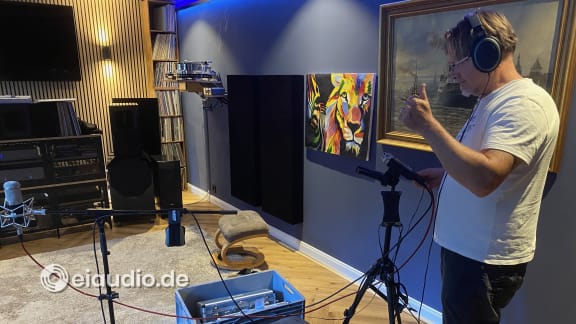
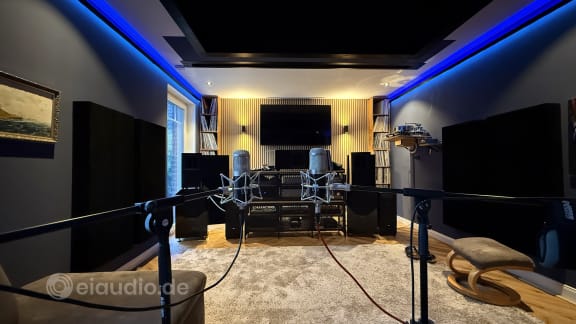
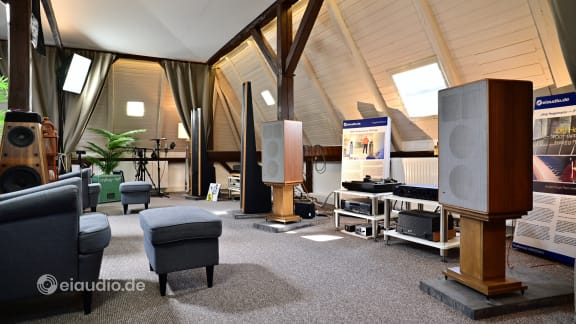
I first set up the L810 in the fourth listening position in my studio. This is not an ideal spot for placing speakers, perhaps because the roof line slopes inwards behind and in front of the speakers from a height of about 1 metre. This can easily create an unpleasant, horn-like compression effect that raises the mid-bass levels unnecessarily. However, it was in this position that I first noticed the L810's bass sounded muddy and overpowering, particularly when the speakers were set up with insufficient distance between them. Additionally, the two large woofers were exciting floor resonances. The small 0.75 mm² speaker cables were also insufficient for woofer control.
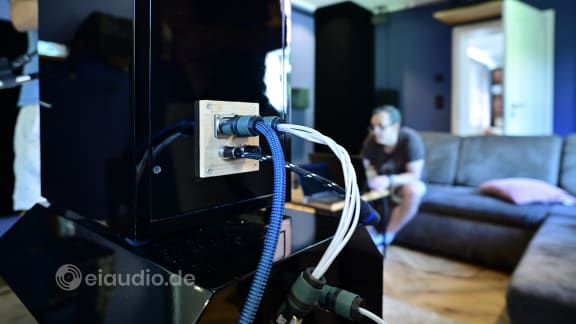
My plan was to replace the fixed cables with terminals. I opted for the low-mass type, which consists of a hollow metal centre prong with plastic screw-on caps. While this type may not be visually attractive, it does have the advantage of keeping capacitance low, which can be beneficial, especially at higher frequencies. I then invited some friends over to listen to the speakers. Henrik pointed out that using the current stands meant that the axis of the tweeter and midrange drivers was at least 30 cm above ear level, which contributed to the general lack of clarity. Nevertheless, everyone agreed that the speakers sounded promising and would be phenomenal with some more tweaking.
I set out to construct two new 40 cm stands. They are coupled to the floor via adjustable spikes, and the speakers sit on top of four felt cushions. I then set up the speakers in listening position three, with a large 100x40 cm concrete slab positioned under each loudspeaker stand to minimise floor resonance. These new conditions greatly improved the imaging and tonality. The L810 series is anything but plug-and-play. They require a large room, with distance between them and the front wall (i.e. the wall behind the speakers). In my setup, the speakers are 2.20 metres apart, with 1.70 metres between their grilles and the front wall.
In my initial testing scenario, I powered the L810 using a Hafler XL280 amplifier and Belden 9497 cables to achieve a slightly brighter sound. However, the overall performance was mediocre at best due to the aforementioned difficulties. In my second setup, I used a Dynavox VR-70E tube amplifier. After a short time, I changed from the Belden speaker cables to a new set of custom-built cables that Matthias had made for use with tube amplifiers. This enabled the L810 to produce more musical detail. Instruments became more palpable and stops shorter. There was greater bass attack and control.
Ever since I first heard them play, I have been drawn back to the L810 time and again. And yet, there is something about them that leaves me feeling strangely unfulfilled and wanting to turn the volume up. Gert Redlich of the German HiFi Museum describes a similar experience. Perhaps the crossover capacitors responsible for the tweeter and midrange sections have dried up, and changing them would achieve a more balanced sound. I will need to spend more time listening to the L810 to be sure and perhaps also conduct some short-range measurements to determine if everything is in order. In marked contrast, however, I never once doubted the sonic integrity of the smaller L480-I. They immediately captured my attention and produced a grin of satisfaction on my face.
Size is overrated, they say. And the L810 certainly will have to show if they have what it takes to please in the long run. If I do change the capacitors, you will surely find out in a separate article. — Let's keep exploring!
Specifications
- Type: 3-way, free-standing speaker
- Original floorstand: Braun LF 700 (tilted)
- Construction: Sealed (acoustic suspension)
- Power handling: 50 watts (DIN nominal)
- Power sensitivity: 94.5 dB (1W/1m)
- Nominal impedance: 8 Ohms
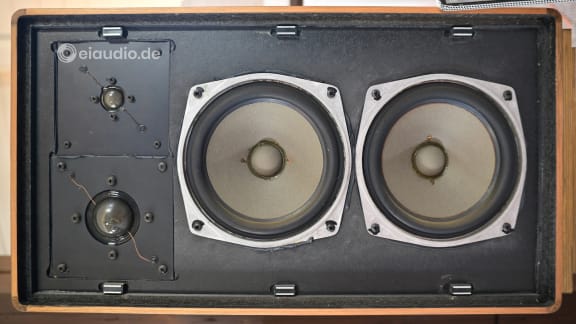
- Woofer: 2x 21mm paper cone (Type LC 20/3)
- Midrange: 50 mm soft dome (15x15cm, Type LC5)
- Tweeter: 25mm soft dome (14x14cm, Type LC 3)
- Frequency response: ~ 20 Hz - 25,000 Hz
- Crossover frequencies: 550 / 4,000 Hz
- Dimensions: (H) 65cm × (W) 26cm × (D) 28cm
- Weight: 22 kg, each speaker
- Cabinet exterior and Finish: real walnut
- Front grille: perforated metal, sliver/grey
- Design philosophy: Dieter Rams, reduced form
- Country of manufacture: Frankfurt, Germany
- Year(s): 1969 - 1972 varying configurations
Dieter Rams
was born in Wiesbaden, Germany in 1932. He is known as the jack of all trades who gave direction to the famous Braun design from the 50s to well beyond the 1980s: Rams who initially started out as carpenter, went on to study architecture and became a notable furniture and interior designer before he joined Braun to contribute to some of the companies acclaimed designs. Rams joined the Frankfurt-based consumer electronics maker in 1955 and went on to become the company’s chief designer, a position he retained until retirement.
Sometimes christened “Mr. Braun” by the company’s advertising, Rams strictly maintained a design philosophy that had been laid out for Braun by Fritz Eichler, Hans Gugelot (lecturer at the Hochschule für Gestaltung, Ulm), as well as Herbert Hirche and Wilhelm Wagenfeld (both former Bauhaus scholars). Their design philosophy was most notable for its reduced form and user-friendliness, the combination of which made Braun highly attractive as a consumer brand from the mid 1950s. Rams has been quoted as saying: “Indifference towards people and the reality in which they live is actually the one and only cardinal sin in design."
To assure the continuation of great design, Rams developed a list of characteristics coined “Ten Principles of Good Design”. These are: innovation, usefulness, aesthetics, usability, unobtrusiveness, honesty, longevity, thoroughness, environmental friendliness throughout the product lifecycle. All principles sound strikingly modern and are found in consumer goods from Apple iPhones to Tesla cars.
Braun AG was sold to The Gillette Company in 1967, which in turn was acquired by Proctor & Gamble in 2005. P&G kept up the production of Braun groomers and shavers—the company’s bread and butter business since 1949—while small household appliances holding the Braun name are manufactured by De’Longhi since 2012.

Lars Pagelsen Trio, Inner Peace

Published: 14/02/2026
Author: Karsten Hein
Category: Music & Talk
Tag(s): Jazz
Lars Pagelsen Trio’s CD album “Inner Peace,” has been produced to a remarkably high standard in terms of sound quality. Its dynamics, spatial imaging, and tonal balance are impressive in their naturalness and transparency—qualities that stand up well, even when compared with well-received international productions. This makes the album particularly interesting for audiophile listeners.
The recording captivates listeners with its natural sound stage, clearly contoured instruments, natural timbres, and high transparency. Piano notes are palpable in the room, the bass is precisely defined and tonally balanced, and the drums are dynamic and finely resolved—without artificial effects or exaggerated compression.
And the trio also shows its musical prowess. Its performances, described as “Mindful Jazz”, are less a style than an attitude. They leave room for nuances, rely on clear harmonic structures, and give each note the chance to take shape. Jazz music should remain comprehensible to its audience—was written in the announcement of the Trio’s live concert at the Elbeforum in Brunsbüttel. “Mindful jazz” thus describes a conscious focus on the essentials: sound, time, and the spaces in between.
Lars Pagelsen has taken a deep interest in jazz since the age of 18. His enthusiasm for the piano and for composing was encouraged by his piano teacher early on, who taught him the basics of notation and independent composition. Today, Lars studies jazz at Dr. Hoch's Conservatory in Frankfurt am Main—an educational path that is by no means standard, given the limited number of places available. It is not surprising then that Lars writes all arrangements for the trio himself.
The album “Inner Peace” was recorded at D-Room Studio in Gehrden near Hanover in 2024. Hervé Jeanne directed the recording, and Ralf Jackowski was responsible for mastering the CD. Lars was accompanied by Eleni Granitza on bass and Nicolas Rotermund on drums. The interplay between the musicians and the album’s thoughtful production have led to its cohesion and tonal depth.
Since the beginning of 2025, the Lars Pagelsen Trio has been performing with a new lineup: Alisa Pou Montz on bass and Felix Lothwesen on drums further expand the tonal spectrum. Alisa Pou Montz, a sought-after musician on the Frankfurt music scene, contributes a clear and groovy bass; while classically educated Felix Lothwesen lends his drums a versatile touch with stylistic openness and perplexing tonal differentiation.
“Inner Peace” thus documents not only a musical approach, but also a snapshot of the development of Lars Pagelsen—thoughtfully produced, sonically sophisticated, and with audible attention to detail. I am very much looking forward to the first recordings of the new lineup. The audiophile community can only hope that future recordings will be approached with similar care. — Let’s keep your finders crossed.
Let's explore together

Get in touch with me
If you happen to live within reach of 25709 Marne in northern Germany and own vintage Hi-Fi Stereo classics waiting to be explored and written about, I would be honoured to hear from you!
Your contact details
All reviews are free of charge, and your personal data will strictly be used to organise the reviewing process with you. Your gear will be returned to you within two weeks, and you are most welcome to take part in the listening process. Gear owners can choose to remain anonymous or be mentioned in the review as they wish.
Thank you for supporting the eiaudio project.
Audiophile greetings,
Karsten


